


Building Capacity for Effective Key Biodiversity Area Identification and Monitoring.
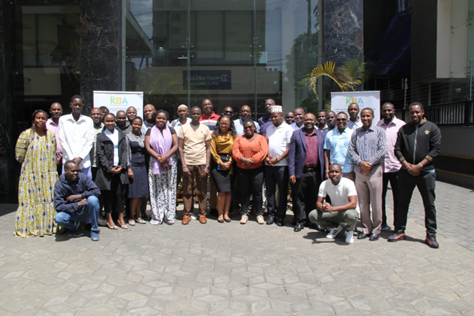
Nature Kenya – the East Africa Natural History Society, in collaboration with key partners, convened a two-day Key Biodiversity Areas (KBA) Capacity-Building Workshop on 13–14 January at the Golden Tulip Hotel in Westlands, Nairobi. The workshop brought together biodiversity practitioners, conservation planners, researchers, and institutional representatives engaged in site-based monitoring and ecosystem management across Kenya and the wider region.
The convening was designed to strengthen technical capacity and foster a shared understanding of the global KBA framework. As KBAs continue to gain prominence as globally recognized sites contributing significantly to the persistence of biodiversity, ensuring consistent application of the KBA Standard and improving the quality of monitoring systems remains critical. The workshop therefore focused on accelerating adoption of the KBA process while enhancing methodological rigor, data integrity, and policy relevance.
Deepening Understanding of the KBA Standard
Participants received a comprehensive overview of the KBA Standard, including the identification criteria and quantitative thresholds used to designate sites of global biodiversity importance. The sessions clarified how these criteria are operationalized in practice, translating technical standards into actionable site-level processes.
The training further examined core KBA monitoring protocols, data requirements, and reporting mechanisms. Emphasis was placed on ensuring that site data is reliable, comparable, and aligned with both national biodiversity strategies and international conservation frameworks. By reinforcing the link between KBA monitoring and policy instruments, the workshop positioned KBAs not merely as mapped conservation sites, but as decision-ready tools that can directly inform land-use planning, conservation investment, and biodiversity governance.
Addressing Implementation Challenges and Sharing Good Practices
A dedicated interactive segment enabled participants to reflect on field experiences and institutional realities. These discussions surfaced common challenges, including data gaps, inconsistencies in methodology, limited technical capacity, and coordination barriers among institutions responsible for biodiversity assessment and reporting.
At the same time, participants shared emerging good practices in data collection, stakeholder engagement, and site-level stewardship. The exchange reinforced the importance of cross-institutional collaboration and peer learning in strengthening the credibility and sustainability of the KBA framework.
Integrating Community Conservancies into the Global KBA Architecture
Strategic conversations during the workshop also focused on strengthening pathways for community conservancies to engage more meaningfully within the KBA process. Community conservancies play a vital role in site-based data generation, biodiversity stewardship, and long-term ecosystem management. However, clearer mechanisms are needed to ensure that their contributions are systematically integrated into the global KBA platform.
Participants emphasized the importance of establishing structured feedback loops, improving technical support, and enhancing the visibility of conservancies within national and international biodiversity reporting systems. Strengthening these linkages is essential for ensuring that community-led conservation efforts are recognized and supported within global conservation architecture.
Moving from Training to Implementation
The workshop concluded with a forward-looking discussion on priority actions and next steps. Participants reaffirmed commitments to follow-up technical support, targeted monitoring training, and strengthened institutional coordination. The emphasis was clear: capacity-building must translate into improved implementation, credible data systems, and stronger integration of KBAs into policy and planning frameworks.
By reinforcing technical standards, strengthening institutional collaboration, and elevating the role of community-based conservation actors, the workshop marked an important step toward ensuring that Key Biodiversity Areas serve as robust, actionable tools for biodiversity conservation and sustainable development.


Comments