


Eastern cluster (ILMAMUSI)Restoration champions inception meeting & training
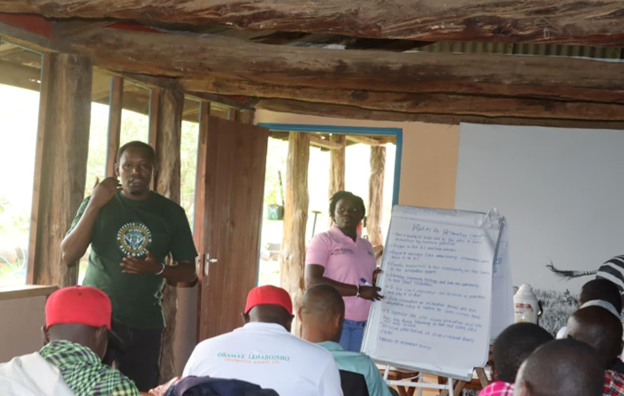
In partnership with the WYSS Academy for Nature, we convened a one-day Restoration Champions Training at Borana–Mazingira Yetu, bringing together participants from Lekurruki, Shulmai, Ilngwesi, and Maiyanat conservancies under the ILMAMUSI eastern cluster.
The training brought together 49 participants (40 men and 9 women), including conservancy management teams, grazing committees, and community-selected restoration champions. The initiative aimed to strengthen monitoring, evaluation, and accountability systems for ongoing rangeland restoration interventions.
Strengthening Community-Led Restoration Monitoring
A key focus of the training was to clearly define the role of Restoration Champions as community-based leaders responsible for safeguarding restored landscapes, particularly areas treated with semi-circular bunds and reseeding interventions. Participants reviewed past restoration efforts and identified gaps in monitoring and protection.
A joint assessment of bunds constructed in 2024 and 2025 revealed significant challenges, with approximately 80% of sites showing limited or no grass establishment. In several cases, grazing pressure, wildlife damage, and weak regeneration reduced restoration effectiveness. These findings underscored the urgent need for stronger protection mechanisms, improved grazing control, and continuous field monitoring.
Integrating Indigenous Knowledge into Restoration
The training emphasized the importance of indigenous knowledge in guiding restoration success. Community elders and experienced herders were recognized as key knowledge holders in seasonal grazing patterns, pasture recovery cycles, and species selection for reseeding. Participants agreed on the need to document locally adapted, drought-resistant species to improve long-term restoration outcomes and resilience.
Strengthening Grazing Management and Digital Monitoring
The restoration champions highlighted the importance of integrating structured grazing records, buffer zone protection, and regular field assessments to support sustainable land use. Restoration Champions will play a central role in monitoring semi-circular bunds, tracking vegetation recovery, and identifying early signs of degradation.
To enhance data-driven decision-making, the team was introduced to Survey123 digital monitoring tools, which will be used to systematically capture restoration progress, grass regrowth, and site conditions. Champions are expected to conduct at least two field visits per month and submit real-time data to support adaptive management.
Building a Sustainable Restoration System
The training concluded with a shared action plan focusing on regular monitoring visits, documentation of indigenous knowledge, structured grazing records, and continuous capacity building. Community champions will work closely with LCA coordinators and conservancy management teams to ensure accountability and timely reporting.
This initiative reflects a growing shift toward community-owned, data-driven, and knowledge-integrated restoration systems, strengthening the long-term resilience of Laikipia’s rangelands.


Comments